
To track ChatGPT referral traffic in GA4, open Traffic acquisition, inspect Session source / medium, and find the source values actually recorded for ChatGPT. Check the current AI Assistant channel as well as individual sources, then add landing pages and a verified lead event. Report these recorded visits separately from AI mentions and qualified inquiries.
This guide is for B2B teams deciding whether AI discovery sends useful visits to their website. The deliverable is a reproducible acquisition report and an evidence record. It does not require a new analytics tool, a sitewide tracking rebuild, or an assumption that every AI visit has the same medium.
Start with the question your report can answer
“Did ChatGPT mention us?”, “Did someone arrive from ChatGPT?”, and “Did that person become a suitable inquiry?” need different evidence. A session report addresses the middle question. A source row cannot reconstruct an answer that a person read without clicking, and a key event alone cannot establish buyer fit.
Use the evidence-led GEO guide for the broader discovery, retrieval and citation model. This article owns the narrower task of reading GA4 acquisition evidence and connecting it to the next business record.
Check the current AI Assistant channel first
Google’s current default channel documentation includes an AI Assistant channel. It classifies recognized AI-assistant referrers using the ai-assistant medium. Google announced this measurement change on 13 May 2026. A tutorial that starts from “GA4 has no AI channel” therefore needs a fresh check.
In your property, inspect Session default channel group for the selected period, then inspect the underlying sources. Do not infer that the absence of an AI Assistant row proves there were no AI-influenced visits. Equally, do not assume that a legacy referral row, a manually tagged visit and a recognized assistant referrer will all appear under one identical label.
Google excludes AI Overviews and AI Mode from the AI Assistant channel and includes their non-ad search visits in Organic Search. Keep that boundary in the report title: an AI Assistant session total is not a total for every AI-enabled search experience.
Find ChatGPT source rows in Traffic acquisition
Use an existing property with working data collection. Record the property, reporting dates and timezone before comparing results. Google’s Traffic acquisition instructions provide the report location and source dimensions.
- Open Reports, then Acquisition and Traffic acquisition. Report navigation may differ if its collection was customized.
- Change the primary dimension to Session source / medium.
- Search the table for
chatgpt. Read the actual rows rather than preselecting onlychatgpt.com / referral. - Record each observed source, medium, sessions and the selected key event. Preserve the raw labels in the export.
- Remove the search and inspect the wider source list if the expected source is absent. An empty filtered table is a finding to investigate.
If an older source alias appears in your own data, document why it belongs in the same reporting family before grouping it. Avoid a broad rule that matches any string containing “AI” or “openai”: it can collect unrelated sources. Source names are classification evidence, not independent authentication of the referring visitor.
Keep session attribution separate from first acquisition
Google distinguishes user-, session- and event-scoped traffic-source dimensions. First user source describes initial acquisition; Session source describes the source associated with a session. Event-scoped attribution answers another question about credit for key events.
For this worksheet, use session dimensions consistently. A buyer might first discover a supplier through ordinary search and return through an assistant later. A first-acquisition view and a session view can tell different stories without either being wrong. Label the chosen scope beside the result so another reader does not treat it as a full journey analysis.
Add the landing page to identify the buyer task
In Traffic acquisition, add Landing page + query string as a secondary dimension. Alternatively, open the Landing page report and add Session source / medium. Google documents both approaches in its Landing page report guide. The landing page identifies the entry page for the session; it is not every page the visitor viewed.
Review the destination against its purpose. Does the page answer a technical question, support a comparison, or explain a service? Then inspect the next useful action on that page. An informational visit may be appropriate even when it does not immediately produce an inquiry. The question is whether the observed destination supports a coherent buyer decision.
Retain the original entry URL in the working evidence. If query-string variants fragment your summary, create a separate normalized-page column for analysis and explain its rule. Do not silently discard campaign context or merge destinations with materially different content. For page-to-page handoffs, use the B2B internal linking audit.
Decide whether a custom channel group is necessary
A custom group can help when an agreed business definition needs to combine verified source aliases or compare a fixed assistant set. It is optional. First establish what the default group and raw rows already show; a new label cannot recover attribution information that was never collected.
Google says custom channel groups are evaluated in channel order, with traffic assigned to the first matching definition. Editing them requires Editor-level access or above. If a group is needed, copy an existing group, define conditions from verified source values, check its position against broader rules, and compare classified rows with your raw-source export before adopting it.
Keep a dated list of included sources and exclusions. A change to that list changes the measurement boundary. Preserve the earlier definition when comparing periods, or explicitly recalculate both periods with the new definition. Do not describe a classification change as new traffic growth.
Connect visits to verified inquiries
Select the specific event that represents the action you want to assess, rather than reporting all key events together. Google’s recommended events distinguish lead generation from later lead qualification. Those event names need implementation and an operational definition; naming an event does not validate the underlying action.
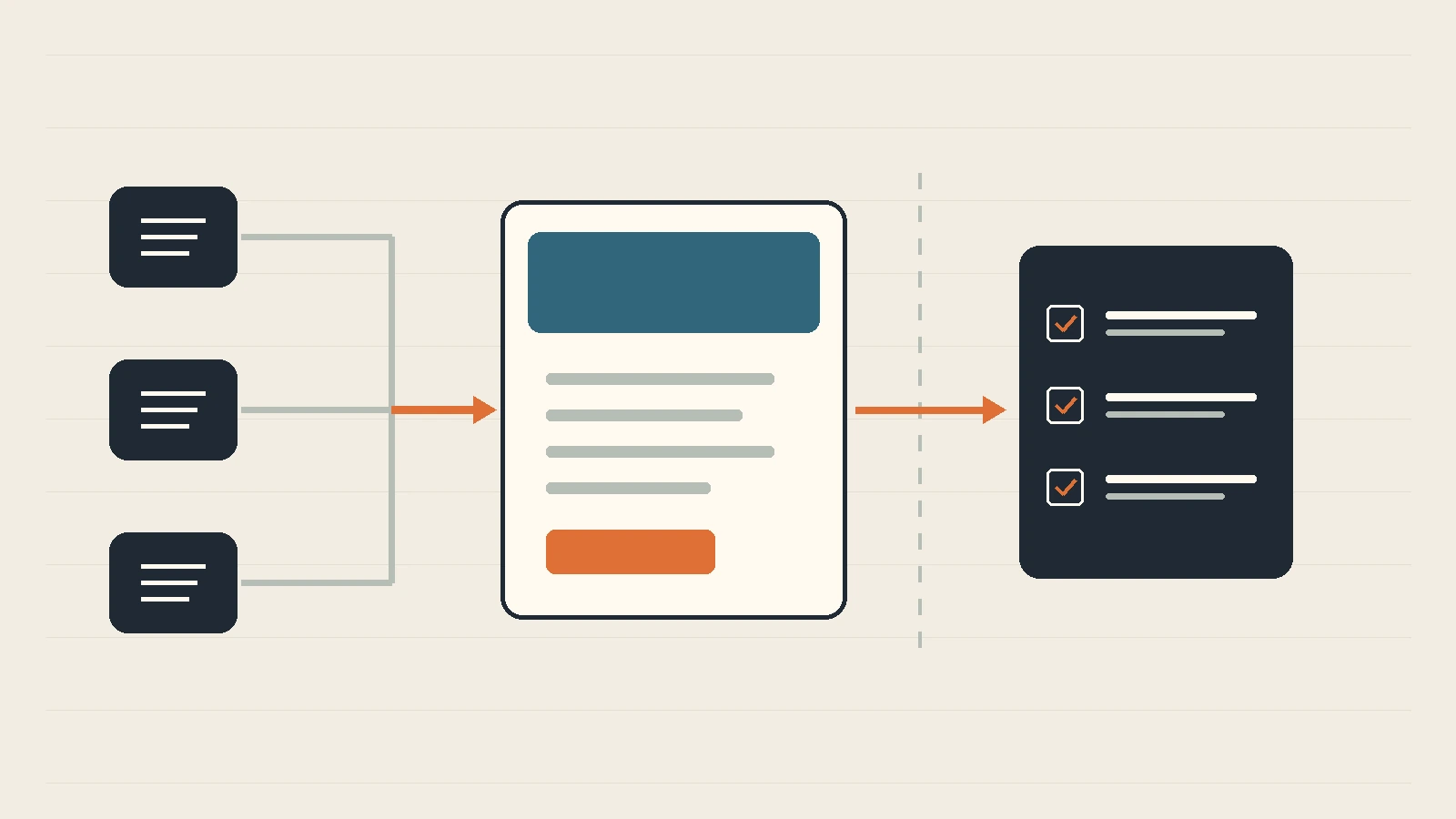
CHCZ’s recommended evidence sequence is: recorded source and landing session → accepted inquiry record → qualification decision. Keep tests, spam, duplicates and unreviewed inquiries separately identified. Match records through your approved measurement process; do not assume every thank-you page view corresponds to a new suitable buyer.
State the denominator whenever presenting a rate. Session key event rate describes sessions containing a selected key event, while a sales qualification rate describes a different set of records. If the inquiry or qualification evidence cannot be accessed, report that stage as Unknown. Do not fill it with an estimate derived from impressions, citations or engagement.
Troubleshoot missing or inconsistent traffic
- No expected row: confirm the correct property, dates, report scope and collection access. Compare unfiltered sources before concluding the source is absent.
- Unexpected medium: retain the value and compare it with current channel rules and any campaign tagging. Do not force every assistant source into Referral.
- Direct traffic increased: Google defines Direct / none as traffic without a clear referral source. That label does not identify which assistant, if any, influenced a visit.
- Sessions and lead records disagree: inspect event definitions, tests, duplicates and accepted submissions before interpreting quality or attribution.
A missing source is unresolved evidence. Do not redistribute Direct into AI traffic, apply an invented undercount multiplier, or claim to recover a person’s prompt from the landing page. Use landing content to form a buyer-intent hypothesis and label it as a hypothesis.
Copy this acquisition evidence record
The following is an editorial worksheet, not a sample of measured business results. Complete one record for a comparable reporting window.
- Scope: property, timezone, dates, session dimensions and comparison period.
- Definition: raw source/medium values; default or custom channel; version of the inclusion rule.
- Entry: landing URL and the buyer question that page is intended to answer.
- Recorded behavior: sessions, selected key event and any collection or reporting limitations.
- Business evidence: accepted inquiries, qualification state, exclusions and reconciliation method; Unknown where unavailable.
- Decision: keep observing, investigate collection, improve the entry answer, or repair the next-step path; owner and next review date.
Use the record to choose one investigation. If source classification changed, resolve comparability first. If visits reach the wrong answer, inspect the page’s intent. If a useful answer has no next step, inspect the reader handoff. Place the resulting check into your existing SEO monitoring system instead of treating every fluctuation as a reason to rewrite content.
Frequently asked questions
Should ChatGPT traffic always appear as referral?
No. Current GA4 documentation includes the AI Assistant channel and an ai-assistant medium for recognized assistant referrers. Inspect actual Session source / medium rows for your dates. Keep observed legacy or differently classified rows visible while reconciling them; do not exclude them through an assumed medium.
Does an empty report prove ChatGPT never recommended us?
No. This report covers recorded visits under its collection and classification conditions. It does not observe every AI answer or every influence on a buyer. Check access, dates, filters and collection before reporting absence, and keep citation observations in a separate evidence layer.
Does the AI Assistant channel include Google AI Overviews?
Google’s current default-channel definition excludes AI Overviews and AI Mode from AI Assistant. Their non-ad search visits are included in Organic Search. Name the scope of an assistant report precisely and avoid presenting it as a combined count of all AI search activity.
Which result should a B2B team report?
Report the recorded sessions and landing pages first, then a clearly defined action and the separately verified qualification stage. Preserve the reporting window, source rule and unknowns. A session, an inquiry and a suitable commercial opportunity answer different questions and should remain separate results.
Sources and editorial boundaries
Official Google Analytics documentation linked above was checked on 15 October 2026. It supports the channel definitions, report dimensions, scope distinctions, landing-page method, grouping order and event terminology. The worksheet, reconciliation sequence and recommendations about business decisions are CHCZ editorial judgments. This guide reports no original implementation test, measured traffic uplift or buyer outcome.
Continue with the SEO / GEO Authority cluster, or bring one acquisition report and its unresolved question to CHCZ.